
What is an agent - and when to use one?
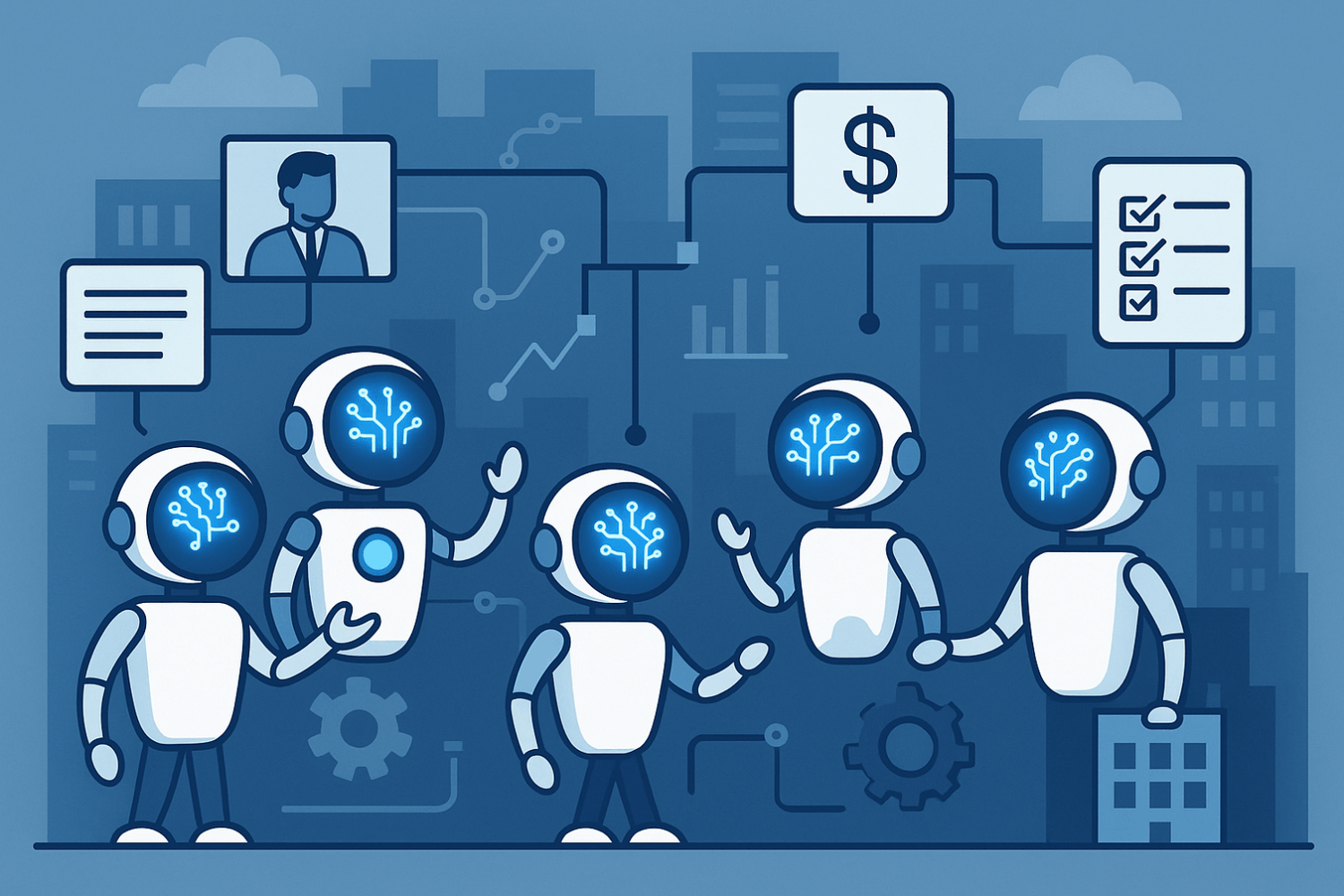
The world is a cacophony of 'agents' and 'agentic' right now.
The world is a cacophony of 'agents' and 'agentic' right now. Words that confuse and scare people. We feel a need to use them to be seen to be thinking along the right lines.
I reckon 8/10 don't actually know what it all means. I only had a vague grasp myself until recently, and this is my job.
Let's get it sorted.
What is an agent, what is a workflow automation, and when is each appropriate.
Spoiler alert: it is way more often not an agent.
𝘞𝘰𝘳𝘬𝘧𝘭𝘰𝘸
A 'boring' automation workflow follows a fixed path. Trigger, steps, output. It is reliable, fast, cheap.
We use these often, or should, when the task is predictable and the rules are clear. These days we will regularly position an AI assistant within a workflow to do a very specific task, and nothing more.
Some people then call that workflow an agent, but it is not.
What a workflow does require is some upfront discipline.
The process(es) need to be properly figured out and mapped.
Hard questions need to be asked, and answered. Why? When? Where? And more.
𝘈𝘨𝘦𝘯𝘵
An agent is different. It can reason via free-flow access to an LLM (eg Claude).
You can set it up fast to look at situations, decide what to do next, use tools it has been granted, check its own work - or that of others, and adjust when something unexpected happens.
In effect, the tasks where a human would normally say "this depends" or "let me figure that out."
Some examples: Investigating a customer issue. Preparing an analysis from scattered sources. Diagnosing why a process failed.
That's the territory agents are built for. When set up correctly we say 'get me this' or 'do that'.
𝘞𝘩𝘺 𝘵𝘩𝘦𝘺 𝘮𝘰𝘴𝘵𝘭𝘺 𝘴𝘩𝘰𝘶𝘭𝘥𝘯'𝘵 𝘣𝘦 𝘶𝘴𝘦𝘥
AI (currently) is just a giant, amazing guessing machine. Not deterministic like a mapped workflow. It is probabilistic; it is coming up with what is most probably correct, next.
Somewhat like a (mostly) angelic and disciplined child. And then, just sometimes, it reverts to a psychotic tic. This needs to be understood before giving it keys to the castle.
They're also way more expensive to operate (also like a child :) and they run slower. They always need guardrails; so more planning, more overhead.
And their failure mode is different. A workflow breaks obviously but an agent can go wrong quietly, several steps in, before anyone notices the chaos.
The business that gets this right runs predictable, high-volume processes on workflows, fast, cheap, invisible - and keeps agents for the small number of tasks where the ambiguity is real and the value justifies the overhead.
Two different approaches, doing two different jobs, neither stepping on the other.
A focused discussion can work out whether it's genuinely agent territory, or a workflow you haven't mapped yet.
But don't do nothing.
----------------------
𝘠𝘰𝘶 𝘥𝘰 𝘵𝘩𝘦 𝘴𝘵𝘳𝘢𝘵𝘦𝘨𝘺, 𝘭𝘦𝘵 𝘢𝘶𝘵𝘰𝘮𝘢𝘵𝘪𝘰𝘯 𝘥𝘰 𝘵𝘩𝘦 𝘸𝘰𝘳𝘬.
----------------------
..
© 202x | JET A-1 automation